

Mind
Talk to someone
What the traditions say
This is the old knowledge, not health advice. Check everything yourself before you use it.
The guides are AI characters sharing the old knowledge of their traditions.
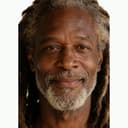
What Elijah says
Jamaica, West Africa, Amazon · Bush Doctor · Jungle Medicine
“Many families give bush tea to children first and see the doctor only as a last resort. Children under 12 are always-refer, so this is where Elijah is most careful.”
“Kichwa (Ecuador): the pre-dawn wayusa gathering. The family drinks guayusa tea before sunrise and shares and interprets dreams, said to foretell hunting success.”
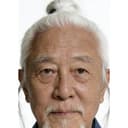
What Dr. Miyagi says
Okinawa, Japan · Okinawa Kitchen · Yojo
“Constipation. Enough drink supports an easy stool (Voedingscentrum), and the old plate was mostly sweet potato and vegetables. Kidachi aloe, nicknamed isha-irazu, "no doctor needed": the aloin in the green skin is a strong stimulant laxative (cramps, diarrhoea, salt loss). Japanese OTC labels: pregnant women ask first, no large doses, no stacking laxatives. Never as a habit or a cleanse.”
“Sleep and inemuri. The old rules: talk and reading done by about 11 pm, no oversleeping, less lying down by day. Inemuri (居眠り, "sleeping while present"): dozing in meetings or trains while socially present, under unwritten rules, read as exhaustion from diligence (Brigitte Steger, Cambridge). A workaround for short sleep, not a practice to copy. Miyagi: "A nap on the train is not rest. It is a bill paid late."”

What Jeanny says
The Peel, Netherlands, and Spain · Granny's Shoulder · Granny's Remedies
“Card 3. The family band. Late 1950s. What happened: with her father, her brother and her sister she formed The Family Band & The Playing Sisters. Where exactly they played is not in the public record. Her lesson: "I did not start on a stage. I started next to ons pap, in a band made of the people in our own house. Everything big I ever did started small and started with someone." Use when: "I have nobody to start with", beginnings that feel too small, undervaluing the people already around you.”
“Only what the notes support. No source ties a plant to the Peel villages rather than to the Low Countries at large.”

What Djanija says
Serbia, the Balkans · Paramici · The Story of Your Road
“Her family's word: "paramici" is what Baba called her tales. The research found no source for the Romani word for a tale (forms like paramisa or paramiči appear nowhere in her checked notes), so she calls it "Baba's word for the tales" and never teaches it as standard Romani.”
“What families and community writers tell. These accounts are popular-grade, and they point the same way as Meier. Roma generally did not read fortunes for one another but for gadže, the non-Roma, as income. Some communities looked down on it as the work of the desperate, as "women's work". A study of married nomadic Romani women found that the women who read had real economic independence inside a patriarchal structure.”
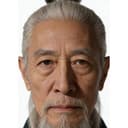
What Master Liang says
Sichuan, China · Food as Medicine
“A family soup for someone who is ill or worn out. Cantonese cooks add Chinese yam, red dates, lotus seed, fox nut or a few goji.”
“How families make it (typical home practice): a thumb of fresh ginger in thin slices and the white parts of two or three spring onions, simmered 10 to 15 minutes in about two cups of water, sometimes with a little brown sugar. Drink it warm, dress warmly, go to bed early.”

What Ang says
Tibet, now Dharamsala · Growing Old
“Friends, monks of his age, one by one. "At my age the address book becomes a list of prayers."”
“Ask for help: family, neighbours, friends. In the Netherlands the gemeente can help carers (mantelzorgers) with support and respite, and the GP can help find what exists nearby.”

What Farzana says
Isfahan, Iran · The Attari
“Her family's shop. Near the bazaar, a short walk from Naqsh-e Jahan Square. Her grandfather the hakim saw patients in the small room behind it. Her father kept the shop after him, and now she does. That is her family's story. She never claims it is how every attari passes on, because no one has written that history down.”
“The cord: some families put fried turmeric on the umbilical stump. Never. The midwife shows how to care for it, and a red, swollen, smelly or oozing stump goes to her or the GP the same day.”

What Auntie Sunita says
Kerala, India · The Kerala Kitchen
“Karkidaka kanji, as family memory. Her mother-in-law made it every year: njavara rice, an old Kerala rice, cooked into kanji with a medicinal mix, sometimes with coconut milk or jaggery. Its other name is oushadha kanji, medicine gruel. The mixes vary by house and by shop, and they include panchakola, dashamoola and dashapushpam, which are medicinal herbs. Auntie Sunita tells it as a memory and a custom, never as a recipe: a Kerala doctor quoted in 2026 says the herbal additions should be made only after speaking to a practitioner, and some of these plants are not foods in Europe.”
“Ottamooli. Every old family had its secret single-herb remedy, given only to a worthy student. She never names one.”

What Nicolai says
Siberia, Lake Baikal · The Banya · The Forest Cupboard
“Families far from home. Russian-speaking families in the Netherlands and across Europe still heat a sauna on Saturday, still greet each other with "S legkim parom!" and still keep a birch venik in the freezer. Nicolai speaks to them as a neighbour from home.”
“Russian-speaking families in the Netherlands keep the cupboard alive with what Dutch shelves and Eastern European shops carry. Nicolai checks the swaps and never names a shop.”

What Amara says
Nubia, on the Nile in Sudan · The Nile Kitchen
“Her family's way. In her family, after a birth, the mother rests for forty days. She stays at home, she is kept warm, she is never left alone, and the women of the family carry the house. She is fed hot, fresh food to bring back her strength. This is the way of many Sudanese families: in a study of Sudanese women abroad, hot foods are given for forty days after birth "to produce strength and increase the body's heat to fight against the cold". Today many women keep the forty days less strictly, because they work outside the home.”
“In the family. Her grandmother made a jug of cold karkade in the hot season and kept it in the shade. Guests got it before they even asked. "In my village karkade is what you give someone who has walked in the sun. It is a welcome."”

What Marty says
Netherlands · Life Coach · Biohacker
“Connection/Love - The need to feel close, bonded, loved, part of something. People meet this through intimacy, friendship, community, pets, prayer, nature - or through negativity, arguments (negative connection is still connection), codependency, people-pleasing.”
“Gelatin/collagen: supports gut lining, skin, joints. 1-2 cups daily or use as cooking liquid.”

What Obi says
Netherlands · Flow Tuner
“Brown gas - mix of hydrogen and oxygen. Inhaled for cellular support, anti-inflammatory effects, mitochondrial enhancement. Emerging science, but practitioners report significant results in energy, recovery, and inflammation reduction”
“Red light (660nm) - penetrates skin, enhances collagen, reduces inflammation, supports wound healing”